 Gaurav Sabharwal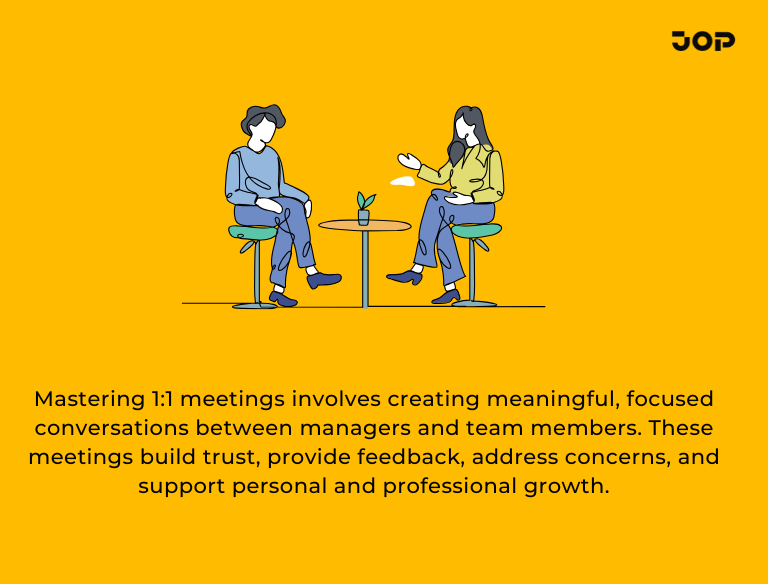
Guide to Objective and Key Results – OKR Meaning and Examples
It starts young when people around you ask, “When you grow up, what do […]
A 1:1 meeting, also known as a one-on-one meeting, is a crucial tool for managers and employees to build strong relationships, discuss progress, and align on key objectives. These 1:1 meetings provide a dedicated space for open communication, feedback, and professional development, helping to foster a culture of trust and collaboration in the workplace. Regular one-on-one meetings ensure alignment between employees and leadership, driving overall organizational success.
Regular one-on-one meetings offer several benefits for both managers and employees:
1. Improved Communication: A structured 1:1 meeting provides a forum for honest and transparent conversations.
2. Stronger Relationships: Frequent one-on-one meetings build trust and rapport between managers and team members.
3. Better Performance Management: 1:1 meetings help track progress, set clear goals, and address challenges proactively.
4. Increased Engagement: Employees feel valued and heard through recurring one-on-one meetings, leading to higher job satisfaction.
5. Personalized Development: A well-structured 1:1 meeting allows tailored coaching, mentorship, and career growth opportunities.
To maximize the impact of a one-on-one meeting, follow these best practices:
Having a structured agenda ensures that both parties make the most of their 1:1 meeting. Common topics include:
A successful 1:1 meeting should be a two-way conversation. Encourage employees to share their thoughts, concerns, and aspirations freely during their one-on-one meetings.
Regular feedback in 1:1 meetings helps employees grow and improve. Use a mix of positive reinforcement and constructive suggestions to guide their development during each one-on-one meeting.
Define clear next steps and objectives at the end of each one-on-one meeting to ensure accountability and continuous improvement. Structured 1:1 meetings help reinforce commitment to growth and success.
Consistency is key to making 1:1 meetings effective. Schedule one-on-one meetings at regular intervals (weekly, bi-weekly, or monthly) to maintain engagement and track progress over time.
Leveraging technology can help streamline and enhance 1:1 meetings. Consider using:
A well-executed 1:1 meeting can transform workplace relationships, improve communication, and drive professional growth. By implementing a structured approach, encouraging open dialogue, and setting clear goals, managers can make one-on-one meetings a powerful tool for employee engagement and success. Prioritizing 1:1 meetings with Joy of Performing (JOP) can lead to a more motivated, aligned, and high-performing workforce.